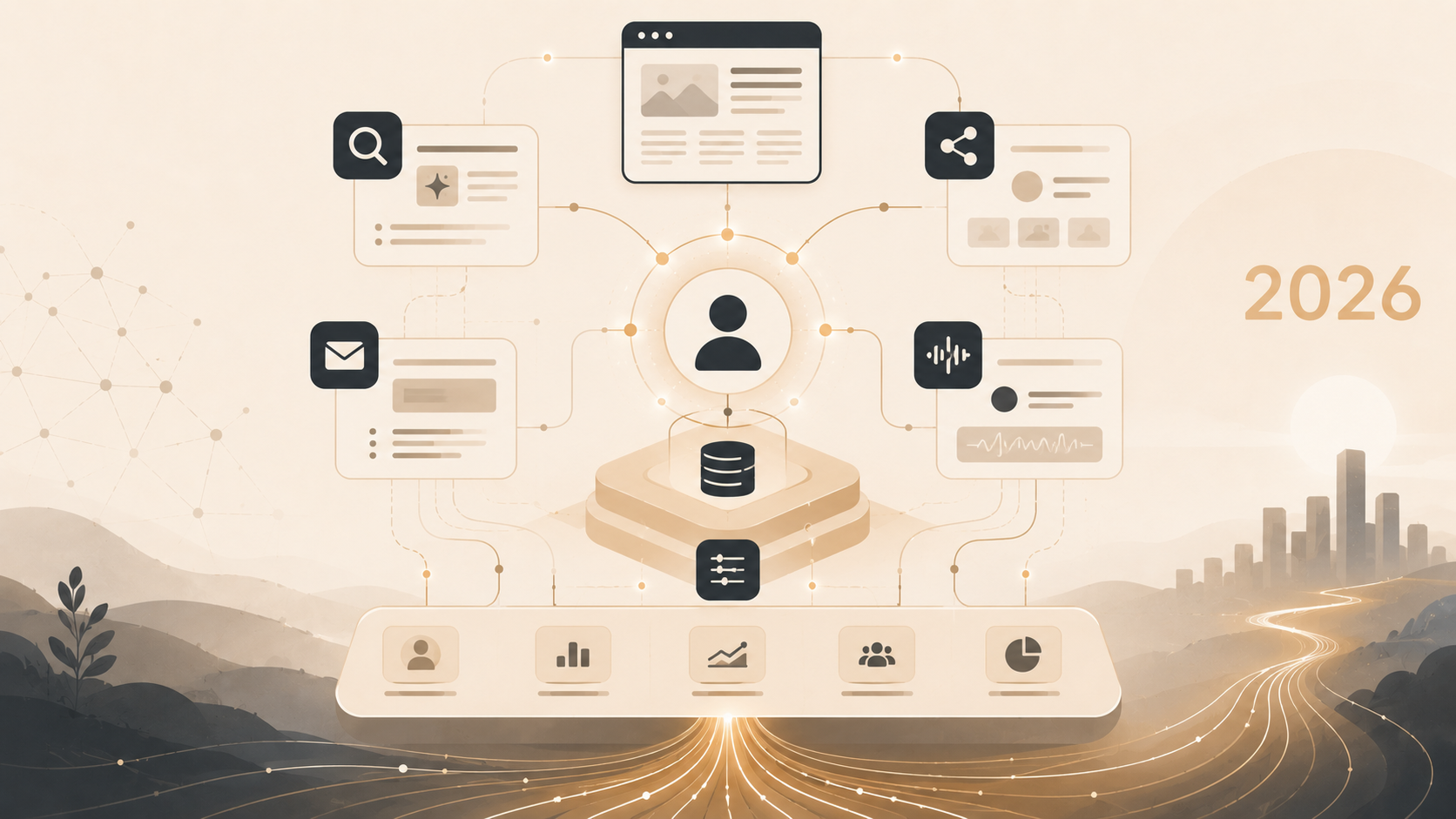
Creating a reinforcing loop for cross-channel campaigns means designing a system where each channel's output feeds and strengthens the next, producing compounding returns rather than isolated wins. Brands that coordinate five or more channels see a 19.8% average sales lift, compared to just 3.1% for single-channel efforts, according to Nielsen's Cross-Channel Campaign Effectiveness Study analysing 6,800 brand campaigns. The difference isn't marginal. It's structural.
"When brands connect data across channels, each touchpoint amplifies the next — it's not additive, it's exponential," says Maya Chen, VP of Growth at Beacon Marketing.
A reinforcing loop turns linear marketing into a self-improving cycle. Here's how to build one.
What is a reinforcing loop in cross-channel marketing?
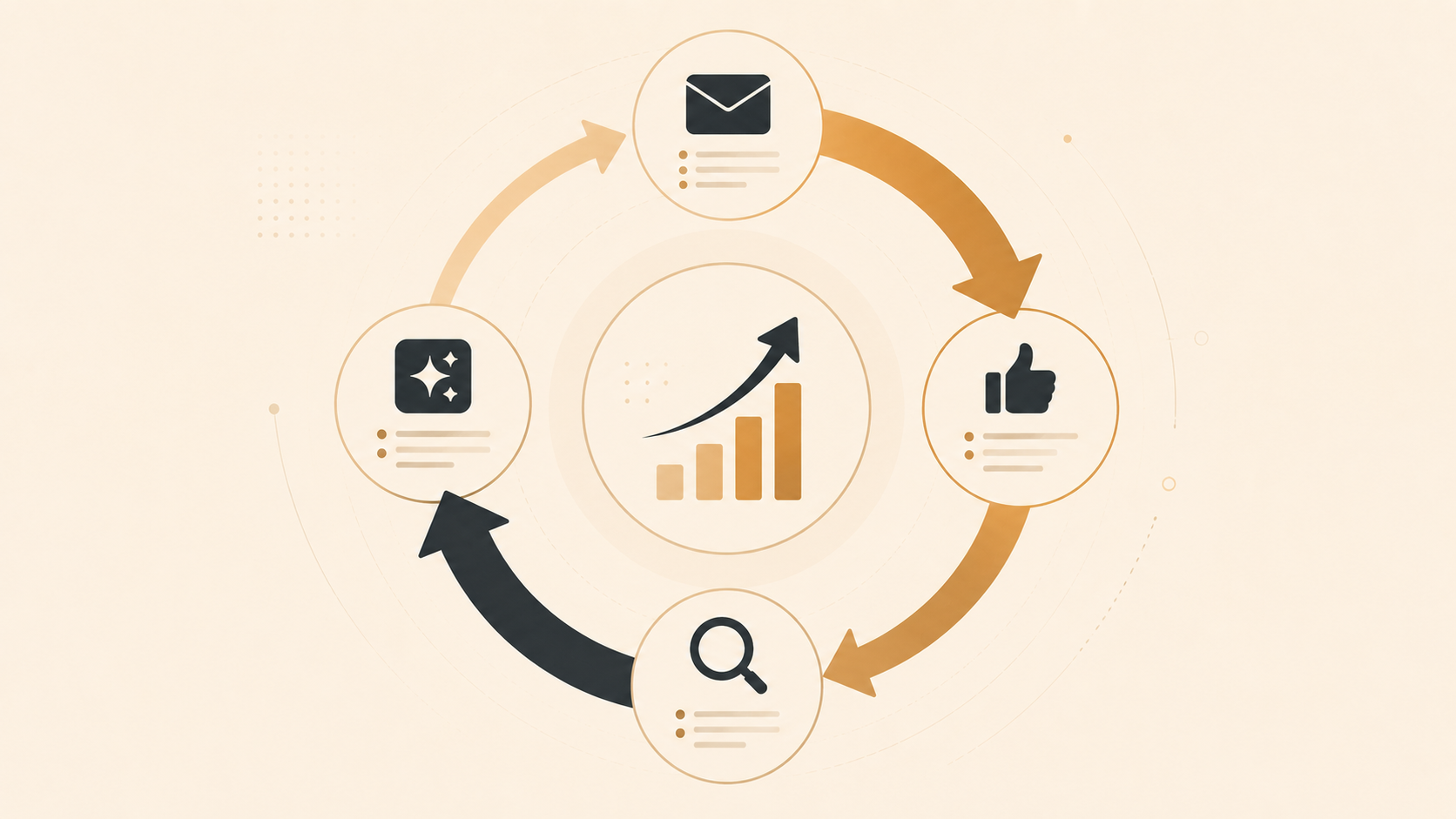
A reinforcing loop is a feedback mechanism where performance data from one channel directly informs and improves activity on another. Think of it as a flywheel: email engagement signals feed paid social targeting, which drives site visits, which generate retargeting pools, which boost email sign-ups. Each rotation tightens the system.
Brands using three or more coordinated channels see a 287% higher purchase rate compared to single-channel brands, per aggregate industry research compiled by Amra and Elma (2025). That multiplier exists because reinforcing loops create cumulative audience intelligence.
How do you build a cross-channel reinforcing loop step by step?
- Map your channel ecosystem and identify where audience data already flows between platforms — even informally.
- Establish a unified customer data platform (CDP) so behavioural signals from every touchpoint feed a single profile.
- Define trigger events on each channel that automatically activate responses on another (e.g., cart abandonment triggers an SMS sequence).
- Set shared KPIs across channels rather than siloed metrics, so teams optimise for the loop rather than individual channel performance.
- Review loop performance weekly. Close the gap between data collection and action — 88% of enterprise marketing teams lack real-time access to cross-channel performance data, which prevents loops from closing efficiently.
How does a reinforcing loop affect retention and revenue?
The commercial case is stark. Brands with omnichannel strategies achieve up to 89% customer retention, while those without manage just 33% — a 56-percentage-point gap, according to a 2025 industry study. Strong omnichannel programmes also deliver 9.5% annual revenue growth versus 3.4% for weak ones.
"Companies that prioritize real-time orchestration consistently close the loop faster and see measurable uplifts in retention and revenue," says Dr. Samuel Ortiz, Principal Analyst at Nexus Insights.
Fully integrated cross-channel advertisers earn an average ROAS of $6.14 per $1 spent, compared with $4.82 for single-channel advertisers — a 27.4% advantage, per Nielsen's Annual Marketing ROI Report tracking $48.3 billion in ad spend across 3,200 brands.
| Metric | Single-Channel | 3+ Coordinated Channels | Difference |
|---|---|---|---|
| Average sales lift | 3.1% | 14.6% - 19.8% | Up to 6x higher |
| Customer retention | 33% | Up to 89% | +56 percentage points |
| ROAS per $1 spent | $4.82 | $6.14 | +27.4% |
| Engagement rate uplift | Baseline | +166% | Significant |
Why do most cross-channel campaigns fail to create reinforcing loops?
The real-time data gap is the primary culprit. Without live feedback flowing between channels, teams react to last week's numbers rather than today's behaviour. AI-powered attribution models have reduced wasted ad spend by 18.9% per campaign on average, and AI-orchestrated campaigns outperform manually managed ones by an additional 7.2 percentage points in sales uplift. Automation isn't optional here. It's the mechanism that keeps the loop spinning.
Seventy-two percent of consumers prefer brands engaging them across multiple channels (2025), a figure Forrester's Consumer Preferences Survey of 14,800 global respondents (2025) places closer to 79%.
Frequently asked questions
- What tools are needed to create a reinforcing loop for cross-channel campaigns?
A customer data platform sits at the centre. Marketing automation platforms, attribution tools, and channel-specific APIs connect the ecosystem so data flows continuously between touchpoints.
- How long does it take for a reinforcing loop to show results?
Most brands see measurable improvement within two to three campaign cycles, though the compounding effect strengthens over quarters rather than weeks.
- Can small teams build effective cross-channel reinforcing loops?
Yes. Start with two channels and one clear feedback trigger. Expand the loop as data quality improves and automation handles the connective work.
- Does a reinforcing loop require AI?
Not strictly, but AI dramatically accelerates it. AI-orchestrated campaigns outperform manual ones by 7.2 percentage points in sales uplift, making the case for automation hard to ignore.