By Jordan Blake, Senior Analyst (MSc Data Science)
Published by Harbor Retail
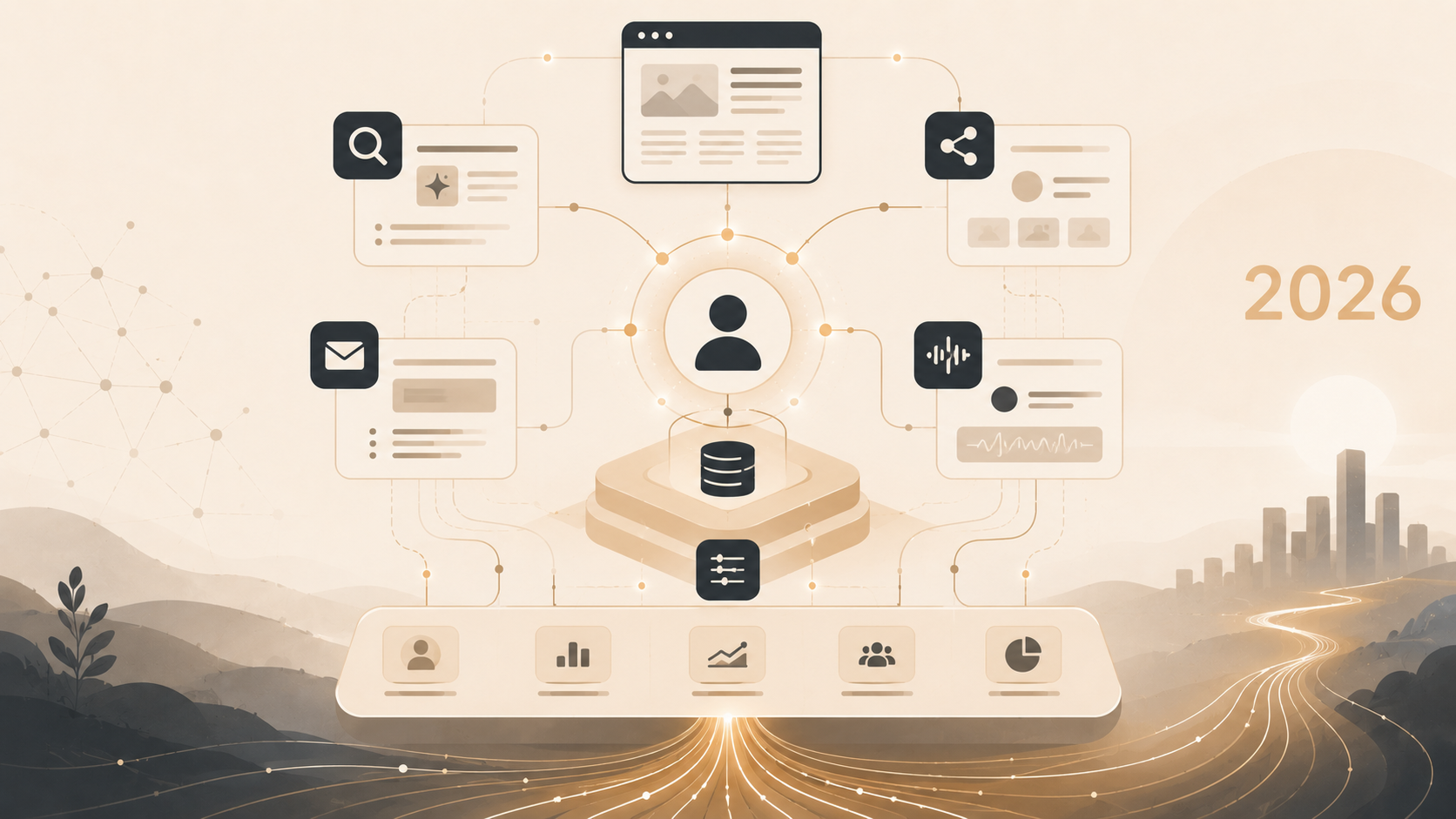
Crosschannel brand presence solutions for 2026 centre on one thing: joining data, messaging and measurement so customers get a consistent experience wherever they meet your brand. That matters because 73% of consumers use multiple channels during a purchase journey, and brands using five or more coordinated channels can see purchase rates rise by 412% compared with single-channel campaigns, according to Improvado and related industry reporting. In practice, that means pairing a customer data platform, shared creative rules, and channel-specific execution across web, email, paid media, social and retail touchpoints.
"Consistent crosschannel experiences are the difference between a one-off purchase and a lifetime customer. Brands that prioritise joined-up data, messaging and measurement see both higher retention and clearer ROI," — Asha Patel, Chief Marketing Officer, Harbor Retail.
What are the best crosschannel brand presence solutions for 2026?
The best crosschannel solutions for 2026 are CDPs, unified measurement, and coordinated content operations. Those three fix the biggest problem first: fragmentation.
The customer data platform market reached $3.28 billion in 2025 and is projected at $4.07–$4.58 billion in 2026, with North America holding 59.60% market share, according to Fortune Business Insights and Mordor Intelligence. That growth tells you where brands are spending to connect identity, consent and behaviour across channels.
Just as important, platform solutions account for 79.82% of 2025 CDP revenue, which suggests businesses want working systems, not scattered point tools. For teams planning 2026 budgets, that’s a strong signal.
Why does crosschannel brand presence matter more in 2026?
Crosschannel brand presence matters more in 2026 because the buying journey now spans far more touchpoints than it used to. Customers don’t move in a straight line. They bounce.
Knexus, cited by Uniform Market, reports that shoppers now use nearly six touchpoints on average before purchase, up from about two fifteen years ago. Half of consumers use more than four touchpoints regularly. If your brand looks disconnected between those moments, recall weakens and conversion slips.
The payoff for consistency is measurable. Aberdeen Group data, cited by Electro IQ, shows companies with strong omnichannel engagement retain 89% of customers, compared with 33% for weak strategies. Omnichannel customers also spend 10% more online, 4% more in-store, and shoppers who buy both online and in-store are worth 30% more over their lifetime.
Which solutions should brands prioritise first?
Brands should prioritise identity resolution, channel orchestration and shared reporting first. In that order.
| Solution area | What it solves | Evidence |
|---|---|---|
| CDP | Unifies customer data and consent | CDP market projected at $4.07–$4.58bn in 2026 |
| Orchestration across 3-5+ channels | Aligns timing and messaging | 3+ channels can drive 250% higher purchase rates; 5+ channels can lift purchase rates by 412% |
| Unified measurement | Shows what actually influences revenue | Omnichannel strategies linked to 9.5% annual revenue growth vs 3.4% for weak strategies |
Revenue Memo estimates the multichannel marketing market grew from $181.77 billion in 2024 to $192.91 billion in 2025, with a projected $349.74 billion by 2035. The market is moving because the economics are hard to ignore.
What should a practical 2026 crosschannel plan look like?
A practical 2026 plan should keep the brand core fixed while adapting format, timing and creative to each channel. Same promise. Different expression.
Start with a single customer view. Then define channel roles: discovery on social and paid media, evaluation on site and email, conversion on commerce or sales, retention through CRM and service. Finally, measure incrementality rather than chasing last-click comfort.
For privacy and data governance, use recognised standards from authorities such as the ICO and platform guidance from major vendors.
FAQ: Crosschannel brand presence solutions for 2026
What is crosschannel in simple terms?
Crosschannel means coordinating brand activity across multiple customer touchpoints so messaging, data and experience feel connected.
How many channels should a brand use in 2026?
Research suggests three or more coordinated channels already outperform single-channel activity, while five or more can produce the strongest purchase-rate gains.
Is a CDP necessary for every brand?
No, but for brands with fragmented audiences, multiple platforms and consent complexity, it’s often the clearest route to consistency.
What’s the biggest risk?
The biggest risk is inconsistency: separate teams, separate data and separate reporting creating a broken customer journey.
What evidence supports the business case?
Strong omnichannel engagement is linked to 89% retention versus 33% for weak strategies, and stronger strategies have been associated with 9.5% annual revenue growth versus 3.4%.